How to say how are you in Japanese
How are you in Japanese is o-genki desu ka (お元気ですか), literally "are you well?" It's used far less often than English "how are you," which functions almost like a greeting on its own — Japanese reserves it more for genuinely checking in, often after not seeing someone for a while.
O-genki desu ka: not a reflexive greeting
In English, "how are you" gets tacked onto almost every hello, and most of the time nobody expects a real answer. O-genki desu ka (お元気ですか) doesn't work quite the same way — it carries more of an actual question about someone's wellbeing, so Japanese speakers use it less automatically. It shows up naturally when you haven't seen someone in a while, in a letter or message, or when you genuinely want to know how someone's doing — not as filler between two people who just saw each other yesterday.
For a straightforward daily greeting, konnichiwa (こんにちは) alone does the job English uses "hi, how are you" for. If someone does ask you o-genki desu ka, genki desu (元気です, "I'm well") is the standard reply, and it's polite to ask it back: o-kagesama de, genki desu (おかげさまで、元気です) — "thanks to you, I'm doing well" — is a slightly warmer version if you want it.
That distinction is worth remembering as a traveler specifically because it's easy to overuse o-genki desu ka the way you'd use "how are you" in English — asking it every single time you see the same host family member or shop owner during a trip can come across as slightly odd, since it implies more time has passed than actually has.
The real small-talk opener: meeting someone for the first time
The phrase that actually opens most first conversations in Japanese isn't o-genki desu ka — it's a short, fixed sequence.
Hajimemashite (はじめまして) means "nice to meet you," and it's specifically for a first meeting; you wouldn't say it to someone you've already met before. It's usually the very first word out of your mouth when you're introduced to someone new.
How to say my name is in Japanese
After hajimemashite, you give your name: [name] desu ([name]です) on its own, or the fuller watashi wa [name] desu (私は[name]です), "I am [name]." Both are correct — the shorter version is more natural in casual conversation, since watashi (私, "I") is often dropped once it's obvious from context who's speaking.
How to say nice to meet you in Japanese, the full version
The sequence closes with douzo yoroshiku onegaishimasu (どうぞよろしくお願いします), a phrase with no clean English equivalent — it roughly means "please treat me kindly going forward" or "I look forward to knowing you," and it's said after introductions as a set closer almost every time. A shorter, more casual version among peers is just yoroshiku (よろしく).
Put together, a first meeting sounds like: hajimemashite, [name] desu, douzo yoroshiku onegaishimasu — nice to meet you, I'm [name], please treat me kindly.
How to say what's your name in Japanese
To ask someone else's name politely, o-namae wa nan desu ka (お名前は何ですか) is the standard phrasing. A shorter, still polite version — common in casual first meetings — is just o-namae wa? (お名前は?), letting the rest of the sentence trail off, which is understood as a complete question in context.
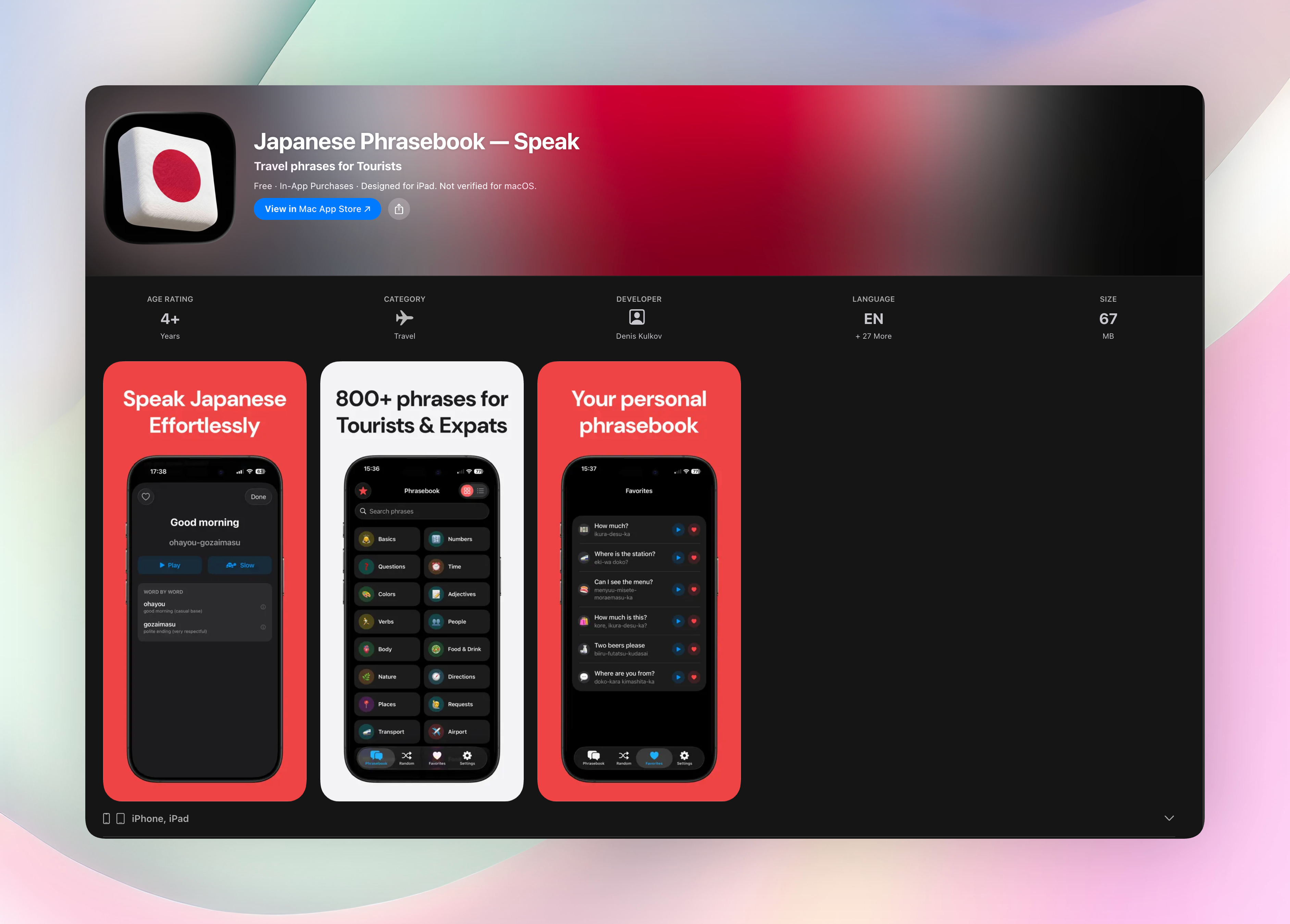
Getting the rhythm of douzo yoroshiku onegaishimasu right takes hearing it — it's a mouthful on the page but flows quickly in real speech. Japanese Phrasebook is an offline app with real-world Japanese phrases organized by category, each with native audio at full and slow speed and a word-by-word breakdown, so you can hear the whole introduction sequence said at natural pace before your first real conversation.
For the rest of the greetings that pair with this one, see how to say hello in Japanese and the full basic Japanese phrases guide.
FAQ
Is o-genki desu ka the same as "how are you" in English?
Not quite. The literal meaning is close, but Japanese speakers use it less as an automatic daily greeting and more when genuinely checking in, especially after some time apart. For a routine hello, konnichiwa alone is more natural.
What do you say when meeting someone for the first time in Japanese?
The standard sequence is hajimemashite (nice to meet you), then your name, then douzo yoroshiku onegaishimasu — a closing phrase with no direct English equivalent, roughly "please treat me kindly" or "I look forward to it."
Can you say hajimemashite to someone you've already met?
No — it specifically means "nice to meet you" for a first encounter. Meeting them again later, you'd use a regular greeting like konnichiwa instead.
How do you politely ask someone's name in Japanese?
O-namae wa nan desu ka (お名前は何ですか) is the polite, complete way to ask. A shorter version, o-namae wa? (お名前は?), is also common and understood as the same question in a casual first meeting.
Free Japanese Phrasebook tools
- Japanese Date ConverterConvert dates between the Gregorian calendar and Japan's modern Meiji, Taishō, Shōwa, Heisei, and Reiwa era notation.
- Japanese Greeting PickerPick a practical Japanese greeting for morning, daytime, evening, or night.
- Japanese Number ConverterConvert whole numbers between Arabic digits and Japanese numerals, with kanji, kana, and romaji readings for prices, quantities, and travel details.
- Konbini Phrase BuilderChoose what you need at a Japanese convenience store and get two ready-to-use phrases.
- Sumimasen Situation ChooserChoose a situation to see how sumimasen works and add a useful follow-up.