How to say sorry in Japanese
The all-purpose way to say sorry in Japanese is sumimasen (すみません) — it also doubles as "excuse me" for getting someone's attention. For a more personal apology, gomennasai (ごめんなさい) fits better; for a formal one, shitsurei shimasu (失礼します) or moushiwake gozaimasen (申し訳ございません).
Sumimasen: sorry and excuse me at once
Sumimasen (すみません) is the phrase you'll reach for constantly, because it covers two jobs English splits into separate words. It means "sorry" for something minor — bumping into someone, a small mistake — and it also means "excuse me," used to get a waiter's attention, stop a stranger for directions, or squeeze past someone on a train. Said with a slight bow or a raised hand, it works in nearly any situation where you're not sure which register fits.
If you only learn one apology phrase, this is the one — it's polite enough for strangers and versatile enough to cover most everyday moments.
Gomennasai: a more personal apology
Gomennasai (ごめんなさい), often shortened to just gomen (ごめん) among friends, is a genuine, personal apology — the kind you'd say to a friend for being late, or to family for something that's actually your fault. It carries more emotional weight than sumimasen and is used with people you're close to, rather than strangers or service staff.
Shitsurei shimasu: the formal "excuse me"
Shitsurei shimasu (失礼します) literally means "I will be rude," and it's a set phrase for moments where you're technically imposing — entering someone's office, interrupting a conversation, hanging up the phone, or leaving a meeting early. It's less an apology for a mistake and more a polite acknowledgment that what you're about to do is a small breach of etiquette. You'll hear the past-tense shitsurei shimashita (失礼しました) used afterward, once the moment has passed.
Moushiwake gozaimasen: the deepest apology
For genuinely formal situations — a business mistake, a customer-service failure — moushiwake gozaimasen (申し訳ございません) is the phrase companies and staff use. It's far more formal than a traveler typically needs, but recognizing it helps: if you hear it, someone believes they've seriously inconvenienced you.
| Phrase | Register | Typical use |
|---|---|---|
| Sumimasen | Neutral, all-purpose | Minor apology, or getting someone's attention |
| Gomen / gomennasai | Casual to personal | Apologizing to friends or family |
| Shitsurei shimasu | Formal | Entering, leaving, or interrupting politely |
| Moushiwake gozaimasen | Very formal | Serious business or service apologies |
How to say please in Japanese
Please splits into two different words depending on what you're asking for. If you want a physical thing, attach kudasai (ください) to the noun — mizu o kudasai (水をください), "water, please." If you're asking for an action, or making a general request without naming a specific object, onegaishimasu (お願いします) stands on its own — say it at a restaurant when you want the check, or when handing something over for a service.
Both pair naturally with the apology words above — a sumimasen to get someone's attention, followed by onegaishimasu to make the actual request, covers most transactions. That two-step pattern — sumimasen, then the actual ask — is worth practicing on its own, because it's how a huge share of everyday interactions in Japan actually start, from ordering food to flagging down station staff for directions.
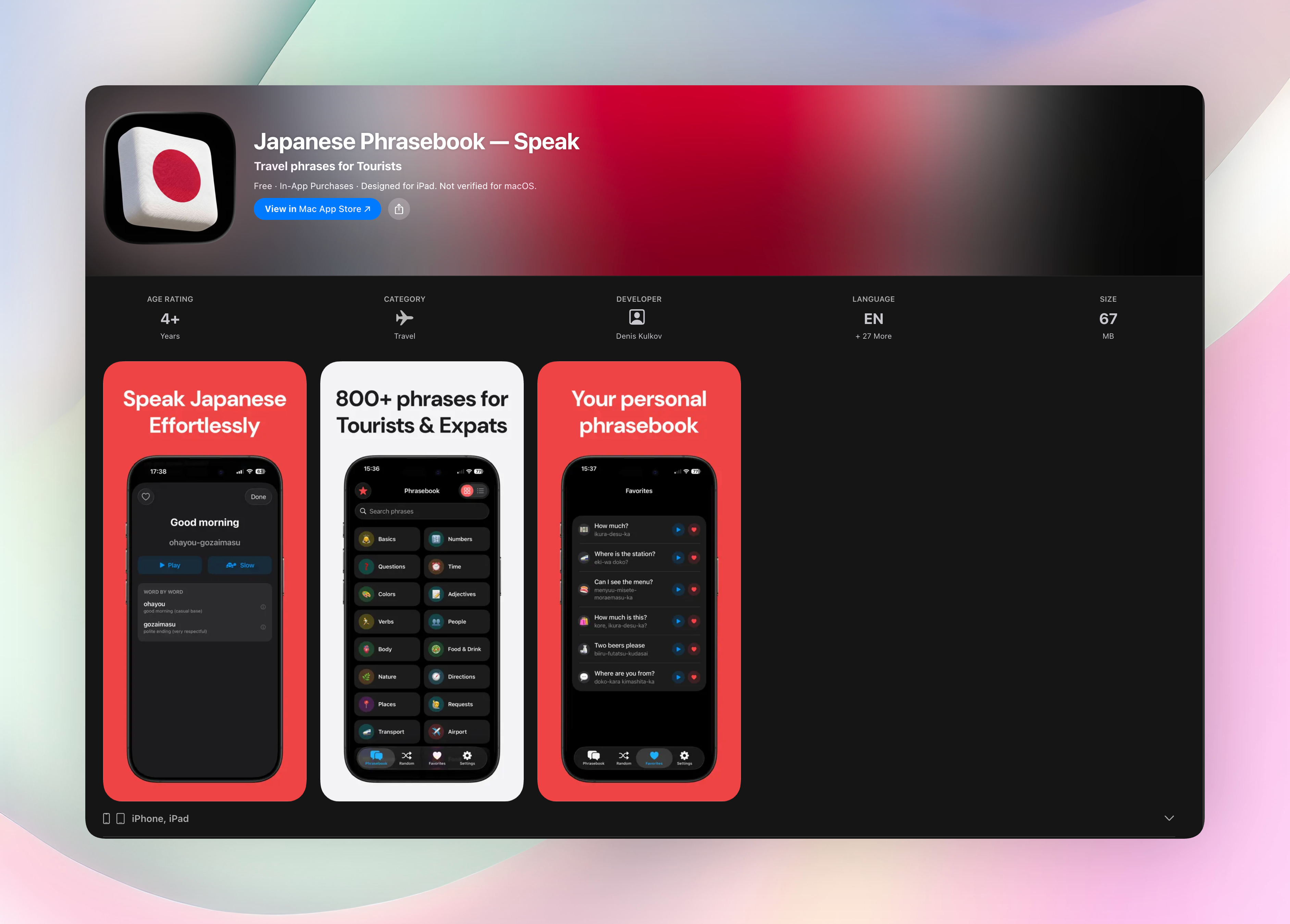
Sumimasen and shitsurei shimasu sound distinct in tone once you hear them said by an actual speaker, more than romaji alone conveys. Japanese Phrasebook is an offline app with real-world Japanese phrases organized by category, each with native audio at full and slow speed and a word-by-word breakdown, so you can hear the register difference before you need it.
For the rest of the politeness cluster travelers rely on constantly, see the basic Japanese phrases guide.
FAQ
What's the difference between sumimasen and gomennasai?
Sumimasen is more neutral and versatile — it works as both "excuse me" and a light "sorry," and it's safe with strangers. Gomennasai is a more personal, sincere apology, generally used with people you know for something that's genuinely your fault.
How do you say excuse me in Japanese to get someone's attention?
Sumimasen (すみません) is the standard phrase — it works to call a waiter, stop a stranger for directions, or step past someone. It's the same word used for a light apology, which is exactly why it covers both jobs.
Is shitsurei shimasu an apology?
Not quite — it's closer to a polite acknowledgment that you're doing something slightly imposing, like entering a room or interrupting. It's a set phrase for those moments rather than a genuine "I'm sorry."
What's the difference between kudasai and onegaishimasu for please?
Kudasai attaches to a noun when you're asking for a specific thing — water, a ticket, an item. Onegaishimasu stands alone and works for requests in general, including asking for an action or service rather than a physical object.
Free Japanese Phrasebook tools
- Japanese Date ConverterConvert dates between the Gregorian calendar and Japan's modern Meiji, Taishō, Shōwa, Heisei, and Reiwa era notation.
- Japanese Greeting PickerPick a practical Japanese greeting for morning, daytime, evening, or night.
- Japanese Number ConverterConvert whole numbers between Arabic digits and Japanese numerals, with kanji, kana, and romaji readings for prices, quantities, and travel details.
- Konbini Phrase BuilderChoose what you need at a Japanese convenience store and get two ready-to-use phrases.
- Sumimasen Situation ChooserChoose a situation to see how sumimasen works and add a useful follow-up.