How to say hello in Japanese
The standard way to say hello in Japanese is konnichiwa (こんにちは), used from late morning through the early evening. Which greeting actually fits depends on the time of day and who you're talking to — Japanese doesn't have one all-purpose "hi" the way English does.
Konnichiwa: the safe, all-purpose hello
Konnichiwa (こんにちは) is the closest thing Japanese has to a default hello. It works with strangers, shopkeepers, neighbors, and acquaintances, and it's the one to reach for if you're not sure what else applies. The main limit is timing — it belongs to the daytime stretch, roughly late morning to early evening, not the first thing in the morning and not really after dark.
It's also a fairly formal, standalone greeting — Japanese speakers don't usually chain it with small talk the way English speakers tack "how's it going" onto "hi." Say it, maybe with a slight bow, and move on to whatever you actually need.
Ohayou / ohayou gozaimasu: good morning, and why you'll hear it all day at some jobs
Ohayou gozaimasu (おはようございます) is the polite morning greeting; the short, casual version among friends or family is just ohayou (おはよう). It covers roughly the morning hours, tapering off by mid-morning.
One genuine oddity: in some workplaces — TV and radio studios, restaurant kitchens, retail — staff greet each other with ohayou gozaimasu at the start of their shift no matter what time it actually is, because for that person it's the first greeting of their working day. If you hear it at 4pm from someone clocking in, that's why.
For the rest of the day's clock — good afternoon doesn't really exist as its own phrase; that's what konnichiwa covers — and konbanwa (こんばんは) takes over for evening.
Moshi moshi: hello, but only on the phone
Moshi moshi (もしもし) is how you answer or open a phone call — never a face-to-face greeting. Say it to someone standing in front of you and it will sound strange, roughly like answering "hello?" to a person who's clearly already looking at you. It stays on the phone, including video calls where the connection just picked up.
Osu: the blunt, casual hello between friends
Ossu (おっす) is a short, rough "hey," used mostly by men and boys with close friends — the kind of greeting a classmate or teammate throws out in passing, not something to use with a stranger or anyone older than you. It's genuinely casual to the point of being a little rough, closer to a grunt than a greeting.
The same syllables show up in a very different context: martial arts dojos use 押忍 (also read osu) as a set response from student to instructor, meaning something closer to "understood" or "yes" — a show of effort and respect, not a casual greeting at all. The two uses share a sound and nothing else; know the setting before you use either.
If basic Japanese phrases for a trip is what you actually came here for, konnichiwa and ohayou gozaimasu are the two that will do almost all the work — save osu for if you make actual friends.
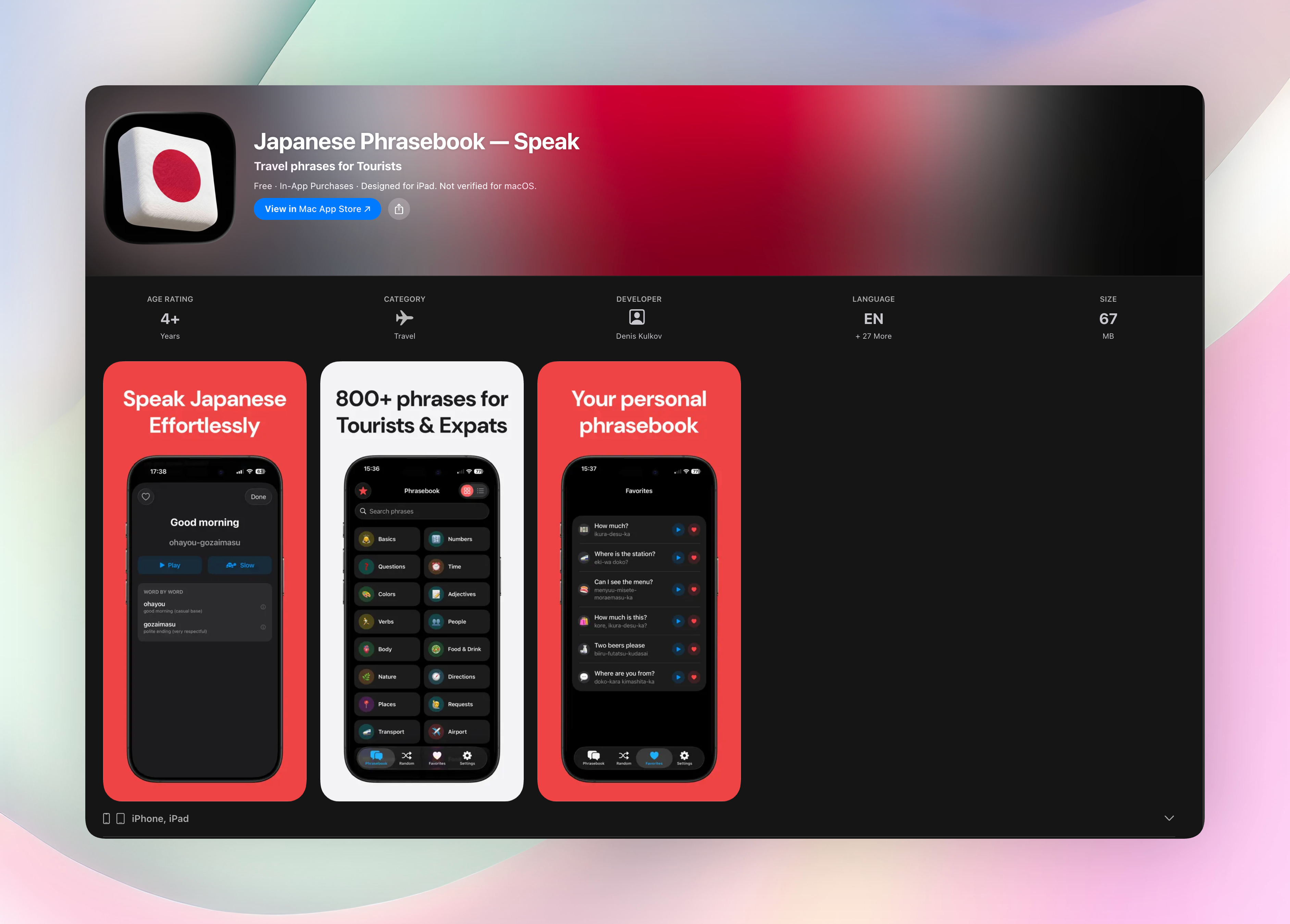
Knowing which hello fits which moment is one thing; hearing the difference in pacing and tone between konnichiwa and konbanwa is another. Japanese Phrasebook is an offline app with real-world Japanese phrases organized by category, each with native audio at full and slow speed, so you can hear these greetings said the way a Japanese speaker actually says them.
FAQ
How do you say hi in Japanese casually?
Among friends, a nod plus "yo" (よう) or ossu works, though both are informal and mostly used by men. For a casual greeting that works regardless of gender, a relaxed konnichiwa or just a wave is safer and won't sound out of place.
What's the difference between konnichiwa and ohayou gozaimasu?
Timing. Ohayou gozaimasu covers the morning; konnichiwa takes over from around late morning through early evening. They're not interchangeable — using konnichiwa first thing in the morning sounds slightly off.
Can you say moshi moshi in person?
No. It's specifically a phone-answering phrase. Face to face, use konnichiwa, ohayou gozaimasu, or konbanwa depending on the time of day.
Is there a Japanese equivalent of "hey" for getting someone's attention?
For that, sumimasen (すみません) is what people actually use — it functions as "excuse me" to get a stranger's attention, whether that's a waiter, a shopkeeper, or someone you need directions from, rather than a greeting like hello.
Free Japanese Phrasebook tools
- Japanese Date ConverterConvert dates between the Gregorian calendar and Japan's modern Meiji, Taishō, Shōwa, Heisei, and Reiwa era notation.
- Japanese Greeting PickerPick a practical Japanese greeting for morning, daytime, evening, or night.
- Japanese Number ConverterConvert whole numbers between Arabic digits and Japanese numerals, with kanji, kana, and romaji readings for prices, quantities, and travel details.
- Konbini Phrase BuilderChoose what you need at a Japanese convenience store and get two ready-to-use phrases.
- Sumimasen Situation ChooserChoose a situation to see how sumimasen works and add a useful follow-up.