
Japanese numbers 1 to 10
Japanese numbers 1 to 10 are ichi, ni, san, yon, go, roku, nana, hachi, kyuu, juu. That's the set you'll use for prices, addresses, and phone numbers. A second, separate counting system exists for general objects, but you only need it in a narrow set of situations.
Japanese numbers 1 to 10
| Number | Counting (ichi–juu) | Objects (hitotsu–tou) |
|---|---|---|
| 1 | ichi (一) | hitotsu (一つ) |
| 2 | ni (二) | futatsu (二つ) |
| 3 | san (三) | mittsu (三つ) |
| 4 | yon / shi (四) | yottsu (四つ) |
| 5 | go (五) | itsutsu (五つ) |
| 6 | roku (六) | muttsu (六つ) |
| 7 | nana / shichi (七) | nanatsu (七つ) |
| 8 | hachi (八) | yattsu (八つ) |
| 9 | kyuu / ku (九) | kokonotsu (九つ) |
| 10 | juu (十) | tou (十) |
The left column — ichi, ni, san, yon, go, roku, nana, hachi, kyuu, juu — is how to say numbers in Japanese for prices, phone numbers, addresses, and math. It's the default reading anyone learning how to count in Japanese should start with. The right column is a separate system, covered next.
Why some numbers have two readings
Three numbers on that list have alternate readings, and it's worth knowing why. Four is yon or shi; seven is nana or shichi; nine is kyuu or ku. Yon and nana are the safer everyday defaults — shi sounds identical to the word for "death" (死), so it gets avoided in certain contexts. It's why some hospitals and hotels skip room or floor numbers containing 4, similar to buildings in the West skipping a 13th floor. Shichi and ku still show up regularly too, especially in set phrases and formal counting, so you'll hear all the variants — yon and nana just won't cause any raised eyebrows.
The other counting system: hitotsu through tou
Beyond ichi through juu, Japanese has a separate set of native numbers used specifically for counting general objects without attaching a counter word — hitotsu, futatsu, mittsu, and so on, shown in the right column above. This system only goes up to ten — past that, Japanese switches back to the ichi-through-juu numbers. You'll hear it used for things like counting apples at a market stall, ordering a general quantity of something without a specific counter word, or a child counting objects. As a traveler, you can get by entirely on ichi through juu; this second system is good to recognize when you hear it, not something you need to produce yourself.
Counting people is its own small exception
One more wrinkle: counting people uses ichi through juu attached to the counter -nin (人), except for one and two people, which are irregular — hitori (一人, one person) and futari (二人, two people). From three onward it's regular: sannin, yonin, gonin, and so on. This comes up constantly when a restaurant asks your party size, so hitori and futari are worth memorizing on their own even before the rest of the counter system.
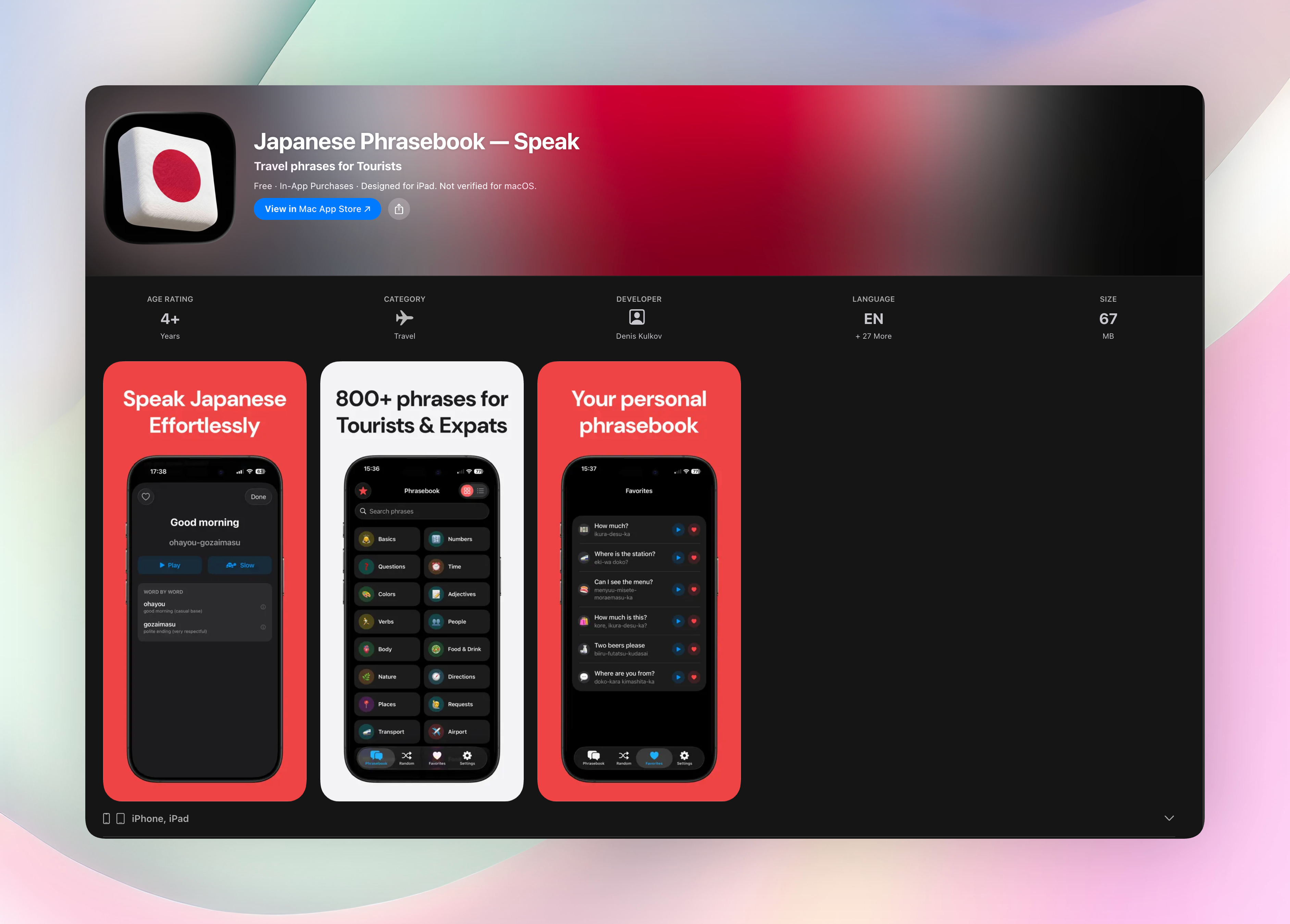
Hearing yon versus shi, or nana versus shichi, spoken at natural speed is a better way to get comfortable with them than reading a table. Japanese Phrasebook is an offline app with real-world Japanese phrases organized by category, each with native audio at full and slow speed, so you can hear the numbers said the way they actually come up in prices and conversation.
Numbers pair naturally with asking prices — see the basic Japanese phrases for travelers guide for "how much is this" and the rest of the everyday phrases a trip calls for.
FAQ
How do you count to 10 in Japanese?
Ichi, ni, san, yon, go, roku, nana, hachi, kyuu, juu. That's the standard set used for prices, phone numbers, and general counting.
Why does 4 have two different readings in Japanese?
Shi is the older reading, but it sounds identical to the word for death, so yon is generally preferred in everyday speech and in contexts like room or floor numbers. Both are correct and widely understood.
Is there more than one way to count in Japanese?
Yes. Ichi through juu is the general-purpose number system; a separate native system — hitotsu, futatsu, mittsu, and so on — is used for counting objects without a counter word, but only up to ten.
How do you say "one person" and "two people" in Japanese?
Hitori (一人) for one person and futari (二人) for two people — both irregular readings. From three people onward, it's the regular pattern: sannin, yonin, gonin, and so on.
Free Japanese Phrasebook tools
- Japanese Date ConverterConvert dates between the Gregorian calendar and Japan's modern Meiji, Taishō, Shōwa, Heisei, and Reiwa era notation.
- Japanese Greeting PickerPick a practical Japanese greeting for morning, daytime, evening, or night.
- Japanese Number ConverterConvert whole numbers between Arabic digits and Japanese numerals, with kanji, kana, and romaji readings for prices, quantities, and travel details.
- Konbini Phrase BuilderChoose what you need at a Japanese convenience store and get two ready-to-use phrases.
- Sumimasen Situation ChooserChoose a situation to see how sumimasen works and add a useful follow-up.