
How to say good morning in Japanese
Good morning in Japanese is ohayou gozaimasu (おはようございます), casual ohayou (おはよう) among friends. Good evening is konbanwa (こんばんは); good night is oyasumi or oyasuminasai (おやすみ/おやすみなさい). All three are tied to the clock, and mixing up konbanwa and oyasumi is the most common beginner slip.
Good morning: ohayou gozaimasu vs ohayou
Ohayou gozaimasu (おはようございます) is the polite morning greeting, and the safe default with anyone you don't know well — hotel staff, a shopkeeper, a host family. Drop the gozaimasu for the short, casual ohayou (おはよう) with friends, family, or classmates.
It covers roughly the morning hours and fades out by mid-morning, when konnichiwa (こんにちは) — the general daytime hello — takes over. One quirk worth knowing: in some workplaces, ohayou gozaimasu gets said at the start of a person's shift no matter the actual time, since it's the first greeting of their working day rather than a literal statement about the hour. How to say hello in Japanese covers that alongside the other greetings if you want the full picture.
Good evening: konbanwa
Konbanwa (こんばんは) is good evening — a greeting you say when you arrive somewhere or run into someone after dark, the same way konnichiwa works during the day. It starts once evening sets in and covers the rest of the night as a greeting.
The easy mistake here is treating konbanwa like "good night" and using it to say goodbye. It doesn't work that way — konbanwa is what you say hello with in the evening, not what you say when you're leaving or heading to bed. That job belongs to a different phrase entirely.
There's also no separate "good afternoon" in Japanese the way English splits morning, afternoon, and evening into three greetings. Konnichiwa (こんにちは) covers the entire daytime stretch, from roughly late morning until evening arrives — so the switch is really just morning-greeting to daytime-greeting to evening-greeting, three phrases instead of English's usual four.
Good night: oyasumi vs oyasuminasai
Oyasuminasai (おやすみなさい) is good night, and unlike konbanwa, it's a parting phrase — said when someone's about to sleep, or as the last thing said before you head off for the night. Casual version among family or close friends: oyasumi (おやすみ).
The clean way to keep konbanwa and oyasumi straight: konbanwa greets someone in the evening, oyasumi says goodnight to end the day. If you show up somewhere at 9pm, you say konbanwa; if you're heading to bed at that same hour, you say oyasumi.
All three, side by side
| Time of day | Casual | Polite | Used when |
|---|---|---|---|
| Morning | ohayou (おはよう) | ohayou gozaimasu (おはようございます) | Greeting someone in the morning |
| Evening | konbanwa (こんばんは) | konbanwa (こんばんは) | Greeting someone after dark |
| Night | oyasumi (おやすみ) | oyasuminasai (おやすみなさい) | Parting for the night / before sleep |
Konbanwa doesn't really shift registers between casual and polite the way the others do — it stays the same either way, which makes it the easiest of the three to remember.
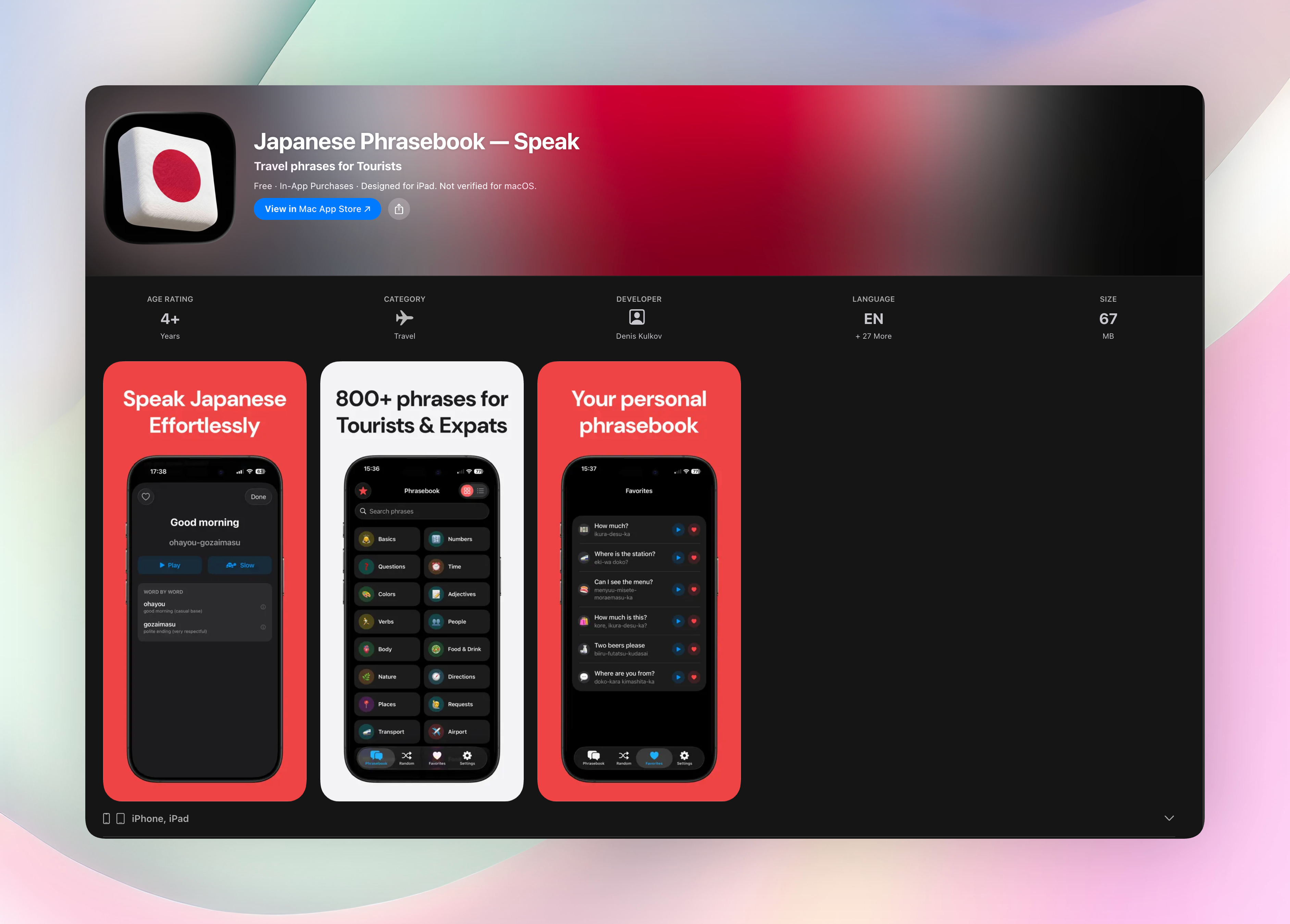
Hearing where the stress falls in oyasuminasai, or how quickly konbanwa gets said in a real greeting, is genuinely different from reading it off a page. Japanese Phrasebook is an offline app with real-world Japanese phrases organized by category, each with native audio at full and slow speed and a word-by-word breakdown, so you can hear all three time-of-day greetings said properly before you try them out loud.
For the rest of the greetings and politeness words a trip calls for, the basic Japanese phrases guide rounds them all up in one place.
FAQ
What time does konnichiwa switch to konbanwa?
There's no fixed clock time — it's roughly tied to when it gets dark or when the evening genuinely feels underway, more a judgment call than a rule. If you're unsure, konnichiwa is the safer choice until it's clearly evening.
Can you say oyasumi to greet someone at night?
No — oyasumi is specifically for parting or for someone about to sleep, not for greeting someone you've just run into. If you're saying hello in the evening, konbanwa is the right phrase; save oyasumi for when you or the other person is heading off for the night.
Is konbanwa formal or casual?
It's fairly neutral and doesn't really have a separate casual short form the way ohayou and oyasumi do. You can use konbanwa with strangers and friends alike.
How do you say good night to someone you're texting late?
Oyasumi (おやすみ) works fine in a casual text to a friend or partner; oyasuminasai is the more polite version if you're texting someone you'd normally speak politely to in person.
Free Japanese Phrasebook tools
- Japanese Date ConverterConvert dates between the Gregorian calendar and Japan's modern Meiji, Taishō, Shōwa, Heisei, and Reiwa era notation.
- Japanese Greeting PickerPick a practical Japanese greeting for morning, daytime, evening, or night.
- Japanese Number ConverterConvert whole numbers between Arabic digits and Japanese numerals, with kanji, kana, and romaji readings for prices, quantities, and travel details.
- Konbini Phrase BuilderChoose what you need at a Japanese convenience store and get two ready-to-use phrases.
- Sumimasen Situation ChooserChoose a situation to see how sumimasen works and add a useful follow-up.