How to say thank you in Japanese
The standard way to say thank you in Japanese is arigatou gozaimasu (ありがとうございます) — polite, and safe in almost any situation with someone you don't know well. Casual thanks among friends is just arigatou (ありがとう); a quick, informal thanks is doumo (どうも).
The thank-you ladder: doumo, arigatou, arigatou gozaimasu
Japanese thanks run on a politeness scale, and picking the right rung matters more than it would in English.
Doumo (どうも) sits at the casual end — a quick, almost throwaway thanks, the kind of thing you'd say to a clerk who hands you your change or a stranger who holds a door. It's light enough that it can sound a little too casual on its own in a more formal exchange.
Arigatou (ありがとう) is the everyday "thanks" you'd use with friends, family, or anyone you're on relaxed terms with. It's warmer than doumo but still casual — not what you'd say to your boss or a stranger.
Arigatou gozaimasu (ありがとうございます) is the one to default to as a traveler. It's polite, general-purpose, and works with shopkeepers, servers, hotel staff, and anyone you've just met. If you only learn one way to say thank you in Japanese, make it this one.
How to say thank you very much in Japanese
For something bigger than a passing thanks, doumo arigatou gozaimasu (どうもありがとうございます) — stacking doumo in front of the polite form — is the standard way to say thank you very much. It reads as more sincere and more emphatic without becoming stiff or overly formal.
There's also a past-tense form worth knowing: arigatou gozaimashita (ありがとうございました). Japanese switches to past tense once an interaction has actually finished — a shop clerk says it as you walk out the door, or you'd use it after someone's already helped you with something, rather than mid-interaction. Native speakers notice the tense; using gozaimasu when gozaimashita fits better isn't wrong exactly, just a small tell that you're not a native speaker, which is fine for a traveler and not something to stress over.
A more specific way to say thanks: tasukarimashita
One phrase that doesn't show up in most quick phrase lists but comes up constantly for travelers: tasukarimashita (助かりました), literally "that helped me" or "you saved me." It's what you'd say after someone gives you directions, translates a menu, or bails you out of a confusing situation — more specific and more genuinely appreciative than a generic arigatou gozaimasu, and it lands well with someone who went out of their way for you.
If you're building out beyond thank-you, the basic Japanese phrases for travelers guide covers the rest of the greetings and politeness words that pair with it, including how to say hello for the other half of most exchanges.
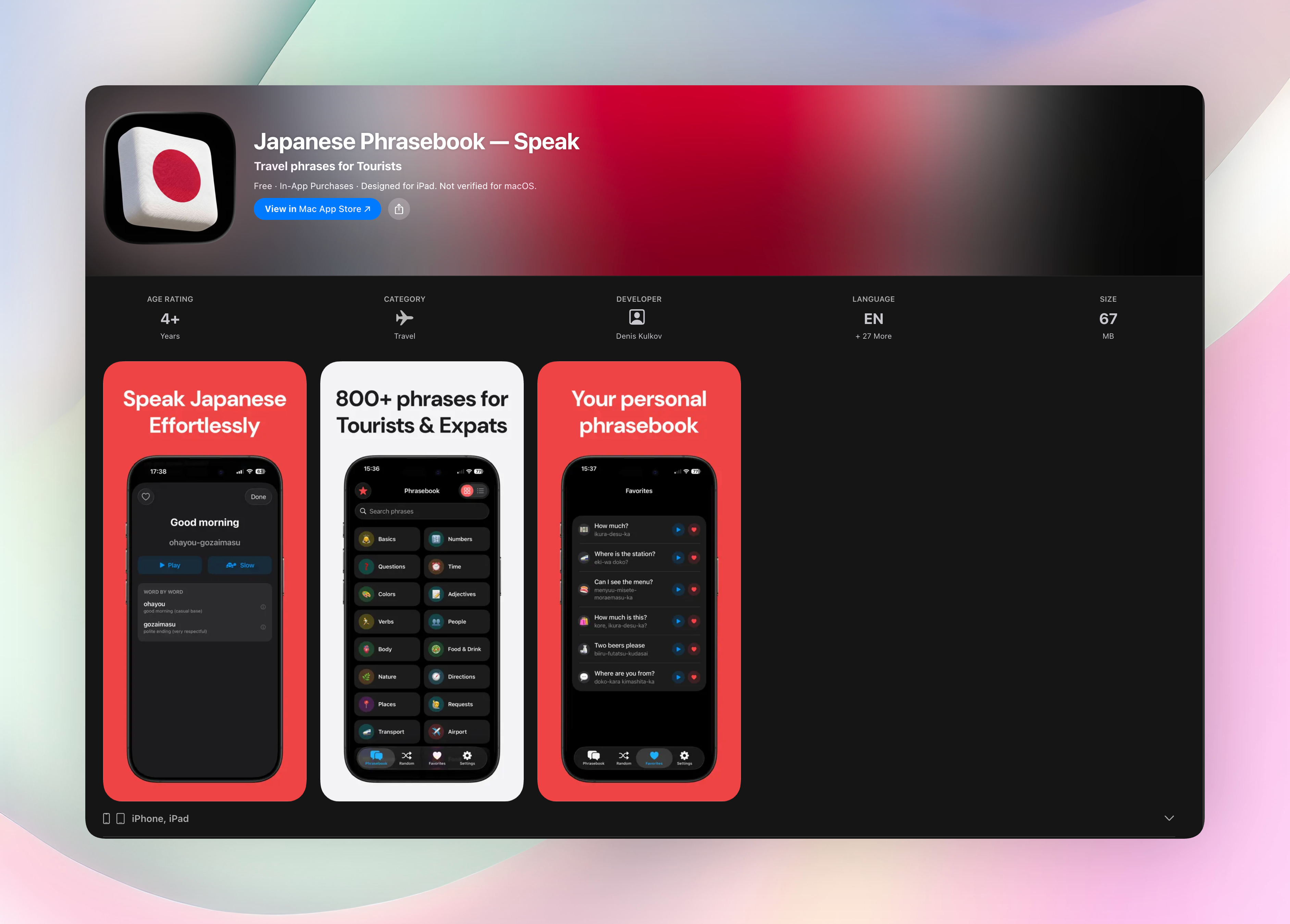
Getting the wording right on the page is one thing; getting the pitch and speed right when you actually say it is another, especially with a phrase like doumo arigatou gozaimasu that runs together fast in real speech. Japanese Phrasebook is an offline app with real-world Japanese phrases by category, each with native audio at full and slow speed and a word-by-word breakdown, so you can hear exactly how it's supposed to sound before you try it yourself.
FAQ
What's the most polite way to say thank you in Japanese?
Doumo arigatou gozaimasu (どうもありがとうございます) is the most common emphatic form. In very formal writing or customer-service settings, you'll also see makoto ni arigatou gozaimasu (誠にありがとうございます, "thank you very sincerely") — but arigatou gozaimasu covers essentially every situation a traveler runs into.
Is arigatou rude to say to a stranger?
Not rude, but a little too casual. Arigatou on its own is friend-and-family territory; with a stranger, shopkeeper, or anyone in a service role, arigatou gozaimasu is the safer, more appropriate choice.
How do you say thanks in Japanese quickly and casually?
Doumo (どうも) is the short, informal version — useful for a quick exchange, like when someone hands you something or moves aside for you. It's not appropriate for a moment that calls for real gratitude.
What's the difference between arigatou gozaimasu and arigatou gozaimashita?
Tense. Gozaimasu is present, used while something is still happening or just about to; gozaimashita is past tense, used once the interaction is finished — a shopkeeper saying it as you leave, for instance. Using gozaimasu throughout is understood fine and won't cause confusion.
Free Japanese Phrasebook tools
- Japanese Date ConverterConvert dates between the Gregorian calendar and Japan's modern Meiji, Taishō, Shōwa, Heisei, and Reiwa era notation.
- Japanese Greeting PickerPick a practical Japanese greeting for morning, daytime, evening, or night.
- Japanese Number ConverterConvert whole numbers between Arabic digits and Japanese numerals, with kanji, kana, and romaji readings for prices, quantities, and travel details.
- Konbini Phrase BuilderChoose what you need at a Japanese convenience store and get two ready-to-use phrases.
- Sumimasen Situation ChooserChoose a situation to see how sumimasen works and add a useful follow-up.