
Best 9 Renshuu Alternatives in 2026: Apps That Fit Your Study Style
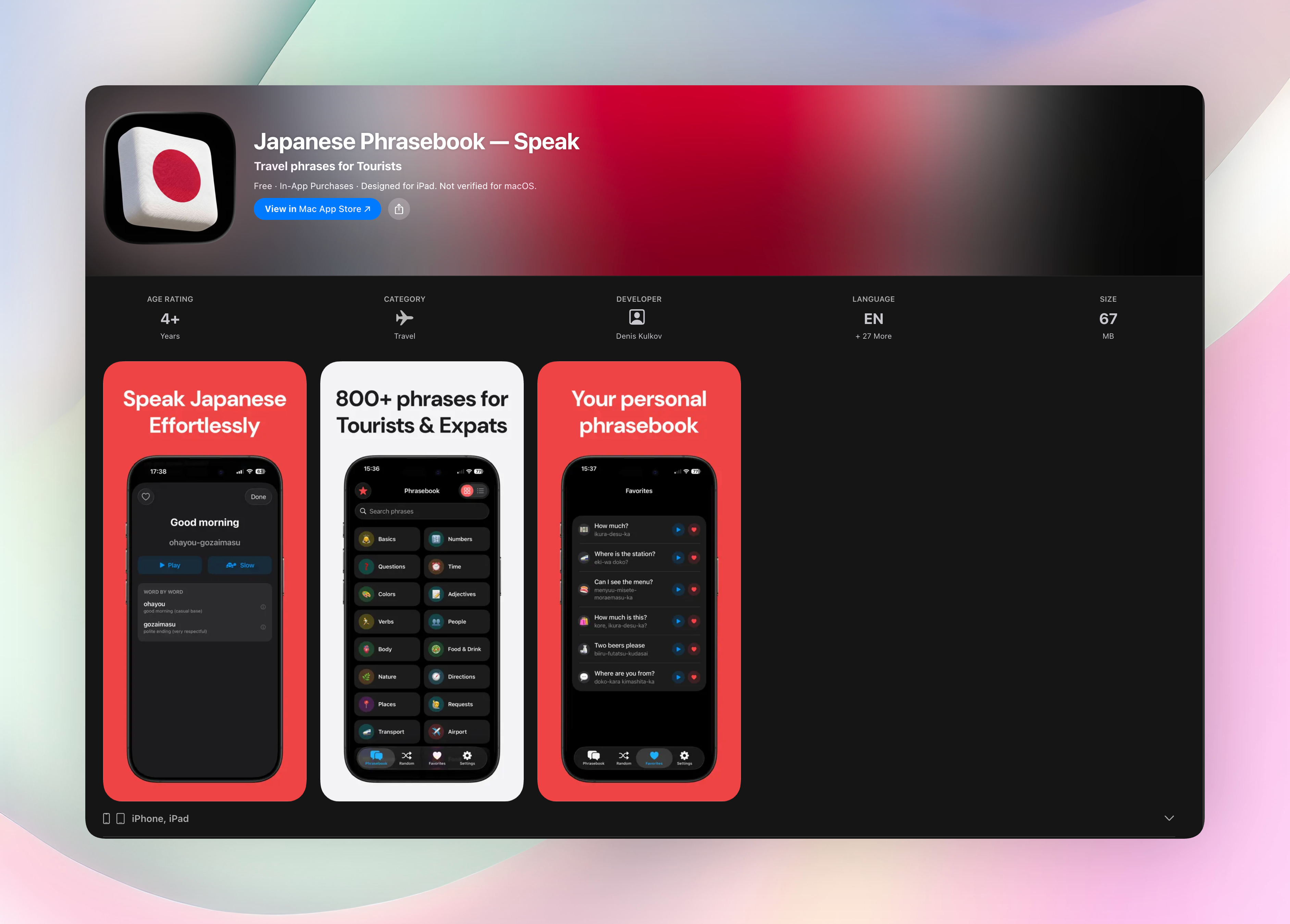
Japanese Phrasebook - Speak is our favourite renshuu alternative for travellers and anyone who needs real spoken Japanese fast. We tested nine apps that swap renshuu’s heavy drilling for grammar, kanji, news, and vocabulary tools. Whether you want instant phrase playback or JLPT grammar, there’s a pick here for your top priority.
Quick comparison table
Here’s how all nine apps stack up for different goals and offline access.
| App | Best for | Offline | Price model | Platforms | Standout strength |
|---|---|---|---|---|---|
| Japanese Phrasebook - Speak | Speaking real phrases fast | Yes | Paid (one‑time) | iOS | Native‑audio phrase packs, no account needed |
| LingoDeer | Structured textbook courses | Partial | Freemium | iOS, Android | Story‑based reading practice |
| Japanese Kanji Study | Kanji mastery | Yes | Freemium | Android | Filter by JLPT level and radical lookups |
| Bunpo | Offline grammar JLPT N5‑N1 | Yes | Freemium | iOS | No‑Wi‑Fi interactive quizzes with immediate feedback |
| AnkiDroid Flashcards | Custom SRS decks | Yes (decks offline) | Free | Android | Total content control, community‑shared decks |
| Obenkyo | All‑in‑one kana, kanji, grammar | Yes | Free | Android | Tae Kim grammar section with offline access |
| EASY JAPANESE NEWS - TODAI | Real‑world reading & listening | Partial | Freemium | iOS | Pop‑up dictionary with audio‑sync highlighting |
| HeyJapan | Casual gamified lessons | Partial | Freemium | Android | Bite‑sized daily lessons with playful UI |
| Tsurukame | WaniKani offline reviews | Yes | Free | iOS | Offline review syncing for WaniKani subscribers |
1. Japanese Phrasebook - Speak
Best for: Real‑world spoken Japanese from day one.
Japanese Phrasebook skips writing and grammar to zero in on the phrases you’ll actually use: ordering ramen, asking for directions, checking into a hotel. Tap any of the 16 real‑world categories (Transport, Food, Small Talk, Dating, and more) and you instantly hear a native speaker say the phrase at full or slow speed. A word‑by‑word breakdown with nuance notes helps you understand what you’re saying, not just memorise sounds. Heart your favourites to build a personal cheat sheet you can pull up in seconds.
Everything works offline, with no account, no login, and no internet required. It’s the only app on this list with a direct download link for iOS. The ready‑to‑use phrase packs with native audio get you speaking in minutes, not months. Get Japanese Phrasebook or grab it on the Japanese Phrasebook on the App Store.
2. LingoDeer - Learn Languages
Best for: Structured, textbook‑style Japanese courses.
LingoDeer walks you from hiragana to intermediate conversation with clear grammar explanations, native audio, and skill‑building paths that feel like a well‑organised textbook. Lessons break complex concepts into digestible steps, and the built‑in story‑based reading practice adds context that pure grammar drills miss. The structured paths include reading, writing, and listening exercises. Detailed grammar notes appear after each drill, so you learn the ‘why’ behind constructions instead of just recognising patterns. If you want a linear curriculum that replaces renshuu’s flashcards with narrative‑driven exercises, this fits the bill. Full access requires a subscription, but the depth makes it a solid alternative.
3. Japanese Kanji Study
Best for: Dedicated kanji mastery on Android.
Japanese Kanji Study dives deep into kanji with custom flashcards, writing challenges, and stroke‑order animations that show you exactly how to write each character. Filter by JLPT level and radical lookups let you zero in on the kanji you need right now, unlike renshuu’s broader quiz mix. Multiple quiz modes test kun‑yomi, on‑yomi, and meanings separately, and example sentences provide context for each character. The writing challenge module with stroke‑order hints cements active recall, turning passive recognition into handwriting skill. It’s a focused tool for Android users who want kanji mastery without distractions.
4. Bunpo: Learn Japanese
Best for: Offline grammar study across JLPT N5‑N1.
Bunpo offers grammar points in clean, bite‑sized lessons with interactive review quizzes that work completely offline. It has a similar drill format to renshuu but with less clutter, and you get instant feedback on your answers without needing an internet connection. An integrated dictionary and progressive path from N5 to N1 make it one of the strongest self‑contained grammar companions. Each lesson ends with a short quiz that reinforces the rule, so you’re not just reading; you’re testing yourself actively. If you want JLPT‑focused practice that doesn’t demand constant connectivity, Bunpo is a practical swap.
5. AnkiDroid Flashcards
Best for: Fully customisable spaced‑repetition study.
AnkiDroid puts you in control of your Japanese decks. Download community‑shared vocabulary, kanji, or grammar collections and sync them with the desktop version. Unlike renshuu’s preset content, you decide what to review and how cards behave. Add audio clips, images, or multiple fields to support the exact recall you’re after. The algorithm optimises review timing, and the sheer flexibility means you can build a system that matches your focus, whether it’s JLPT vocab or conversational phrases. Total content ownership makes it a favourite for dedicated self‑studiers.
6. Obenkyo
Best for: All‑in‑one kana, kanji, and Tae Kim grammar on Android.
Obenkyo bundles hiragana, katakana, kanji, and a complete Tae Kim grammar guide into one free package. Multi‑choice quizzes and handwriting recognition test your recall in a way that feels closer to active production than renshuu’s tap‑to‑answer drills. The built‑in dictionary helps you look up words without leaving the app, and the entire Tae Kim grammar section works offline, which many renshuu users value for a structured grammar reference without Wi‑Fi. It’s an all‑in‑one Swiss Army knife for Android‑based Japanese study.
7. EASY JAPANESE NEWS - TODAI
Best for: Real‑world reading and listening comprehension.
TODAI serves fresh daily news articles with furigana, tap‑to‑translate, and audio that highlights words as they’re read. It’s a leap away from renshuu’s isolated drills, immersing you in authentic written Japanese. JLPT mock tests and difficulty‑tailored articles let you practise at your level. The integrated pop‑up dictionary and synchronised audio reading make it easy to decode unfamiliar kanji and improve listening at the same time, which turns passive study into active understanding. Regular news updates keep content from going stale.
8. HeyJapan: Learn Japanese
Best for: Casual beginners who want bite‑sized, gamified lessons.
HeyJapan teaches vocabulary, alphabet basics, and elementary grammar in short daily bursts wrapped in a cheerful, streak‑driven interface. The playful design keeps you coming back without the weight of renshuu’s heavier quiz sessions. Lessons rarely exceed 10 minutes, so it’s easy to sneak in study during a commute or break. It won’t replace deeper grammar work, but for building a consistent early habit, the low‑pressure format is a genuine asset. The gamified progress tracker and cute visuals make the first steps of Japanese feel less like a chore.
9. Tsurukame - For WaniKani
Best for: WaniKani offline kanji reviews on iOS.
Tsurukame is a dedicated client that brings WaniKani’s SRS‑based kanji learning offline. You can customise review batch sizes, play native audio, and follow the same mnemonic‑driven method that WaniKani fans trust. After syncing when online, reviews work on the subway or without a signal, exactly what commuters need. The app preserves WaniKani’s leveling system, so your progress stays intact. If you’re already invested in WaniKani but frustrated by the always‑online requirement, Tsurukame turns your iOS device into a standalone review station.
How we picked these apps
What makes an app a genuine renshuu alternative
A real alternative doesn’t just copy renshuu’s drill model; it reduces repetitive quiz fatigue while still providing structured progress through ready‑to‑use phrases, clear grammar explanations, focused kanji practice, or immersive reading.
Our test criteria
We installed each app on its intended platform and worked through beginner‑level content. We compared the learning loop to renshuu’s, paying attention to feedback speed, how quickly drills turned into actual application, and offline reliability. Rather than seeking a perfect renshuu clone, we prioritised apps that solve a specific pain point, like conversation confidence, kanji retention, grammar clarity, or engaging reading, so you can fill the gap that matters most to you.
Frequently asked questions
What’s wrong with renshuu?
Renshuu is well‑built, but its quiz‑heavy style can feel slow if you’re after quick speaking wins or shorter daily sessions. It’s thorough, just not the fastest route to real conversation.
Is Japanese Phrasebook enough for JLPT preparation?
No, it’s a phrase‑based speaking tool, not a test‑prep resource. Pair it with Bunpo or Japanese Kanji Study to cover exam grammar and kanji separately.
Can these apps be used completely offline?
Japanese Phrasebook, Bunpo, Obenkyo, and Tsurukame work fully offline. AnkiDroid lets you review downloaded decks offline, but syncing requires occasional connectivity; Todai needs a connection to fetch fresh news.
Which option is the most affordable?
Obenkyo and AnkiDroid are completely free. Japanese Phrasebook uses a one‑time unlock with no recurring fee, making it a cost‑effective pick for phrase mastery without a subscription.
The verdict: Our top pick
If you’re tired of grammar apps that feel like homework, Japanese Phrasebook - Speak is the refreshing alternative. It cuts straight to real conversation with native speaker audio that works offline, so you can learn on the plane, in the station, or anywhere without a signal. For anyone ready to stop drilling and start speaking, Get Japanese Phrasebook and make your next interaction count. The other eight apps on this list fill specific gaps like kanji, JLPT grammar, and news reading, so pick the companion that matches the piece you’re missing.
Free Japanese Phrasebook tools
- Japanese Date ConverterConvert dates between the Gregorian calendar and Japan's modern Meiji, Taishō, Shōwa, Heisei, and Reiwa era notation.
- Japanese Greeting PickerPick a practical Japanese greeting for morning, daytime, evening, or night.
- Japanese Number ConverterConvert whole numbers between Arabic digits and Japanese numerals, with kanji, kana, and romaji readings for prices, quantities, and travel details.
- Konbini Phrase BuilderChoose what you need at a Japanese convenience store and get two ready-to-use phrases.
- Sumimasen Situation ChooserChoose a situation to see how sumimasen works and add a useful follow-up.